What survives the evidence handoff
Weekly archive
papers selected in 23 papers selected in 2026
Choose a highlighted date to read its issue. New selections every Friday.
Coverage: 13 November 2026 to 20 November 2026. 5 papers. Permanent link
An agent team can collect more evidence while passing less of it to the person or agent making the decision. A worker's summary can lose the second half of a contradiction. A memory can select one current value and hide the dispute behind it. Several accurate observations can acquire an unsupported relationship as they become a narrative.
These transformations are central to Substrate Dynamics: the shared environment conditions what later participants can encounter and act on. For RAGE and Recurse, they make the relationships around a claim consequential. Its source, competing accounts, period of validity and status as observation or inference can all affect its use.
This issue brings together four new papers and a substantive revision of a study covered earlier this month. The results below are the authors' reports, not independent replications by us. Connections to our research are interpretations and suggested comparisons.
Memory inconsistency: evidence found can still be evidence lost
Hejia Zhang and colleagues · 17 November, revised 18 November · Paper, v2 · Measurement
This study plants numerical conflicts in 11 Harvey LAB document-review tasks and follows both claims through source reads, worker reports, lead evidence and the final report. At comparable generation spending across three models, mandatory delegation raises retrieval of both conflicting claims from 50.2% to 68.7%, while judged conflict detection falls from 16.2% to 13.2%.
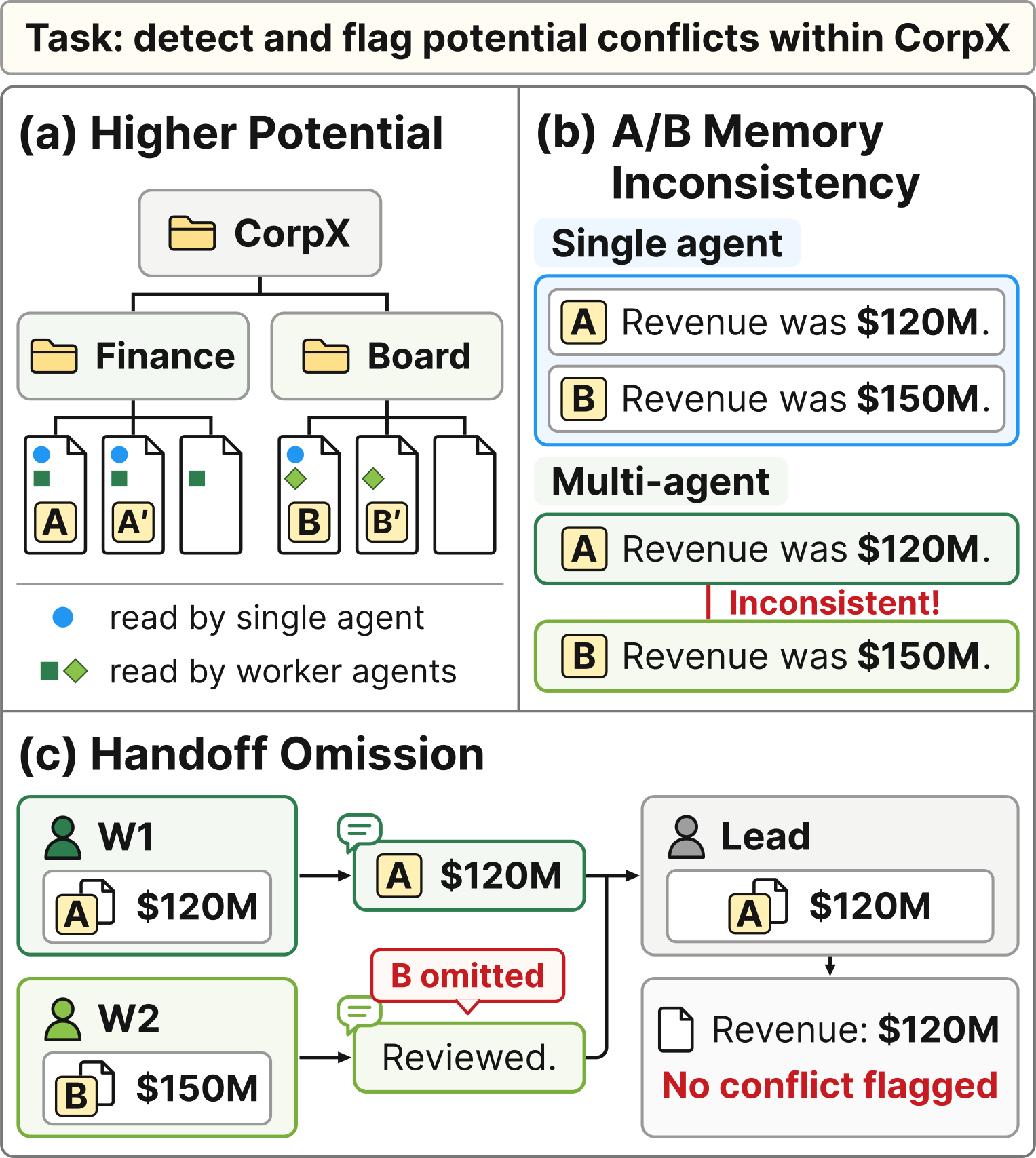
Figure 1 from Zhang et al., Multi-Agent Memory Inconsistency, unchanged. CC BY 4.0. Open any figure for its original resolution.
Only 35.2% of the pairs retrieved under mandatory delegation are preserved together in worker reports. Cases where one worker supplies both sides differ from cases where evidence is split across workers. Results.
The policy also partitions documents and prevents the lead from reading originals, so this comparison bundles several changes. Matched evidence-distribution groups are observational; two runs per model and an imperfect model judge limit the inference. Scope.
For RAGE/Recurse, the useful evaluation target is whether a relationship survives transport. Counting retrieved claims separately can conceal the loss of the pair needed to recognize a disagreement.
DebateGraph: preserve the competing accounts
Ziaullah Khan and colleagues · 17 November · Paper · Ablation
DebateGraph compares passing a ranked conflict set into a three-agent debate with collapsing it to one winning claim. Both arms use the same retrieved evidence and a 1,500-token context budget.
In an expanded LoCoMo run, surfacing the alternatives raises F1 from 0.116 to 0.456 and reduces successful poisoning from 22 to 7 of 122 items. This result follows a consequential change to retrieval: the original candidate-edge cap left most planted contradictions unreachable. At that setting the accuracy effect was smaller and the attack-success reduction was not established. The full-sample HotpotQA accuracy interval also includes zero. Setup and replication.
The admission gate provides another caution. Its groundedness heuristic can favor a lie about an entity already in the graph over a truthful first mention. Provenance features and admission rules therefore need their own ablations.
This connects directly to our read vs write gating work: a coherent stored answer and a useful opportunity to contest it are different outcomes. The study supports testing visible disagreement in this harness. One model family, template-generated attacks and memory that fits full context leave broader claims open. Limitations.
Truthful fragments: check the connection between them
Jinwei Hu and colleagues · 16 November · Paper · Methods
Generative Montage arranges material from true or non-rumour-labelled threads into feeds that suggest unsupported conclusions. Across 1,090 rumour targets from six public events, twelve of fourteen tested models accept the targets more than 65% of the time. The targets include false and unverified rumours, so this measures unsupported acceptance under constructed feeds rather than the prevalence of confirmed false belief in deployment.
Synthetic controls give a useful qualification: influential fragments and variable responses can also occur when evidence genuinely supports a conclusion. Influence alone cannot certify evidential support. Controls.
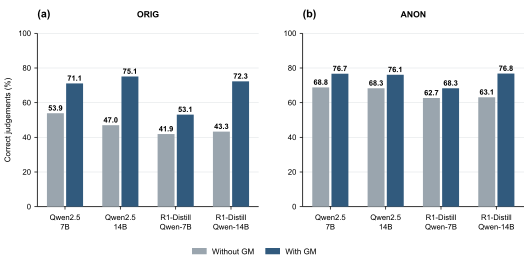
Figure 5 from Hu et al., Language-model agents' beliefs can be manipulated, unchanged. CC BY 4.0. The response condition adds uncertainty and conditional warnings; uncertainty on rumour targets counts as correct non-acceptance.
Their Grounded Monitor uses model-classified direct support for one target. Its improved decision scores evaluate the monitor together with that changed response protocol. Legitimate multi-premise inference remains difficult to distinguish from an unsupported connection. Monitor.
For frame-based knowledge work, this makes the status of a relationship important: observed, directly supported and inferred connections should remain distinguishable as claims circulate.
LEDGER: a current fact needs a history
Md Aidul Islam and colleagues · 16 November · Paper · Architecture
LEDGER lets a model propose facts while explicit rules decide which value is current, disputed, superseded or deleted. Entries retain sources and validity periods. LEDGER+EP adds raw-turn retrieval for material the fact store misses.
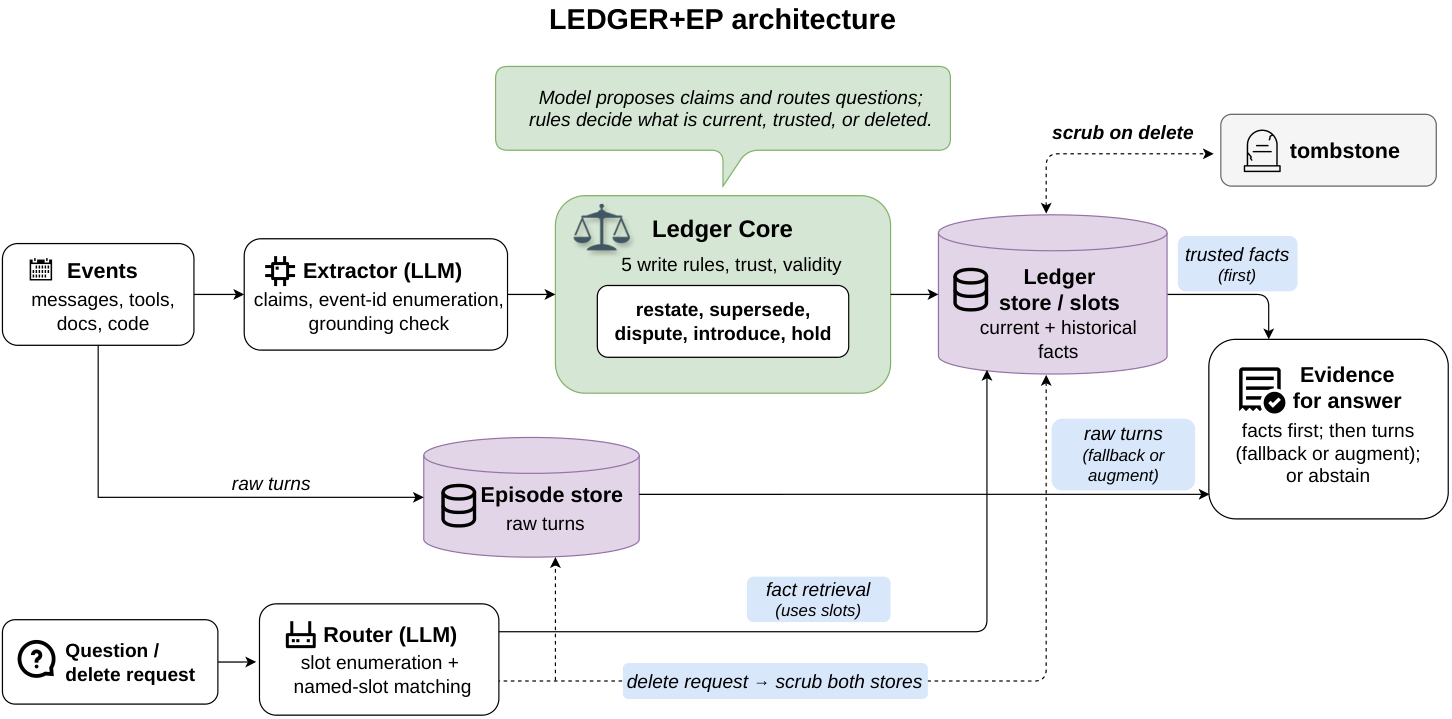
Figure 1 from Islam et al., LEDGER, unchanged. CC BY 4.0.
On a balanced 210-question LongMemEval subset, the augment variant matches full replay's observed 74.8% accuracy with about 1% of its injected context. The paired 95% interval spans −6.2 to +6.2 points, so equivalence is unestablished. The authors' synthetic coding workload favors their assumed trust policy; held-out seeds still share that generator. Evaluation.
For RAGE/Recurse, separating a superseded claim from a deleted one is a concrete representation requirement. The guarantees remain conditional on extraction, routing, source ranking and time assumptions. Validity begins when a fact is stated, which mishandles late reports of earlier changes. Deletion also leaves earlier snapshots, response caches and run logs outside its scope. Assumptions, deletion scope.
Evidence quality and final-answer accuracy deserve separate scores: an answer can omit a deleted value that already reached the answering model.
Revisited: checks before a requirement is signed
Xiaobo Chen and colleagues · First submitted 5 November; revised 17 November · Signed but Not Safe, v2
Our 6 November issue covered the distinction between protecting a requirement in transit and extracting it correctly. Version 2 adds a third model family and an offline evaluation of checks before signing.
The new gate blocks every unsafe injected commit in the evaluated recorded runs. On Qwen3-8B, however, it refuses 45.8% of benign requests and reduces conformant commits by 8.3 percentage points. Some refused cases would already have been unsafe or unsuccessful without the gate, so refusal rate and lost useful completions are separate quantities. New evaluation.
The rules were specified after the injection results, then frozen before evaluation. Their word lists draw on the same fixed attack templates; the replay makes no new model calls. Adaptive or paraphrased attacks remain untested.
For shared knowledge systems, this is a useful bounded comparator for checking interpretation before granting authority to a stored claim. Its zero residual on these templates establishes a narrow result with a completion cost, rather than a general solution to requirement extraction.
Preserve the grounds, then test the use
Across these studies, a source link is one part of a larger record. A decision may also need the competing value, the relationship that supports an inference, the time a statement applied, or the reason a requirement was treated as binding.
For our research, a useful comparison would follow those relationships through ingestion, handoff and retrieval, then measure conflict recognition, justified answers and useful completion at comparable resource budgets. Better-looking records would leave the central question unresolved if agents never consult the retained alternatives or improve only by refusing more work. These are proposed comparisons, not capabilities established by this reading.
This issue covers 13–20 November 2026 in arXiv Multiagent Systems, including cross-lists. Four selections are newly submitted papers; the fifth is an explicitly dated revision. All links identify the versions read.