Memory changes what counts as evidence
Weekly archive
papers selected in 23 papers selected in 2026
Choose a highlighted date to read its issue. New selections every Friday.
Coverage: 23 October 2026 to 30 October 2026. 5 papers. Permanent link
An agent group can retain a fact while changing what that fact appears to establish. A repeated claim can look like several independent reports. Another person's preference can become a remembered instruction from the user. An accurate rule can mislead when carried into a different situation.
This week's papers approach memory as a set of decisions about evidence, ownership and applicability. For Substrate Dynamics, these decisions matter because what enters a shared store conditions what other agents encounter next. For RAGE and Recurse, they sharpen the question of which relationships must survive extraction, compression and reuse.
These are five new preprints submitted on 26–29 October. Their results are reported by the authors and have not been independently reproduced here. Connections to our research are interpretations and proposed comparisons.
CrossProfile: relevance does not settle usefulness
Anouar Imel and colleagues · 27 October · Paper · Methods and results
Rare, Relevant, and Still Wrong holds fact text fixed while varying which agents possess it. Its CrossProfile benchmark crosses the ownership of supporting, decoy and irrelevant facts across 480 tasks. Here, decoys can be true and relevant to the decision criteria while favoring a competing option.
Across the tested models, rarest-first selection works when rarity happens to identify useful evidence; it is roughly level with random selection when averaged across configurations. Relevance-first selection has a stronger average, yet still admits misleading evidence in particular configurations. The reader also gives extra weight to facts tagged as having many holders. Removing those tags improves one classic hidden-profile condition, rather than establishing that attribution is generally harmful. Results.
For our work, the useful distinction is between finding a relevant frame and preserving its evidential role. A retrieval score says little about whether a claim supports an answer, qualifies it, or derives from something already represented. A useful comparison would hold the available facts constant while changing their representation and attribution. These synthetic tasks do not yet establish how those effects scale to an evolving shared corpus.
Replication or Corroboration: preserve the roots of a claim
Hoang-Loc Cao and colleagues · 26 October · Paper · Framework and audits
Matching reports can repeat one source or arise from distinct evidential roots. This paper formalizes an aggregation rule that ignores further renderings of an already represented root while remaining responsive to a fresh root. It checks the distinction in exhaustive argumentation-graph audits and matched interventions on 277 AVeriTeC-derived profiles.
The important qualification is at the input. Lineage is supplied to the judge. The system does not discover or authenticate the roots, and distinct labels do not establish statistical independence. The guarantees concern aggregation under that supplied partition. False splits can inflate support; false merges can suppress it. Trust boundary and limitations.
This gives RAGE and Recurse a precise representation question: can several passages remain connected to their common source without erasing genuinely separate support? Content deduplication alone cannot express that distinction. A grounded comparison should measure lineage-construction errors separately from the behavior of a judge given correct lineage. The paper's formal guarantees provide a target for that comparison, not evidence that our present graph-construction pipeline already satisfies it.
Role grounding: remember whose preference it was
Haoran Bu and colleagues · 28 October · Paper · Evaluation
Is it my preference? studies a different failure of context preservation. An agent reads another agent's account of its own user's preferences, then stores that preference as belonging to the reader's user. The publisher can remain correctly identified while the principal inside the remembered statement becomes wrong.
The authors evaluate five memory systems and six model backends in a controlled social-platform simulation with downstream tool-selection and privacy-leakage tasks. They report persistent misattribution and behavioral effects across configurations. Those experiments demonstrate a concrete failure mode; they do not estimate its prevalence across deployed assistants. Analysis.
For Recurse, a source link is only part of the record that must survive. Who published a statement, whom it describes, and who authorized its use as a preference are separate relationships. Frame-based representation could make these bindings explicit, but storing the fields would still leave extraction accuracy and enforcement to test. A useful evaluation would check whether those bindings survive each transformation from source passage to stored memory to retrieved context, including nested quotations and indirect reports.
DiscernMem: separate a bad rule from a bad occasion
Yipeng Hao and colleagues · 27 October · Paper · Method
DiscernMem separates defects in a remembered behavioral rule from reuse in an unsuitable context. It compares task replays with a single memory and with no memory, validates proposed repairs against current and earlier tasks, and records role-specific conditions for using or avoiding a memory.
With Qwen3-4B-Instruct-2507, the paper evaluates four benchmarks on AutoGen, CAMEL and MacNet. It reports the best average in each host's comparison and leads in eight of twelve host–benchmark combinations; baseline scores are drawn from the prior ConMem evaluation. Replay requires repeatable tasks with automatic scores, adds executions, and assesses memories individually. Interacting rules can therefore escape its diagnosis. Results and scope.
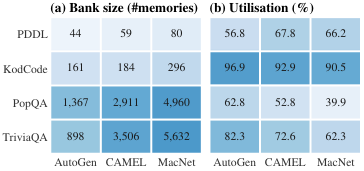
Figure 3 from Hao et al., DiscernMem, unchanged. CC BY 4.0. Reuse percentages record whether a memory was injected at least once, without establishing benefit.
For Substrate Dynamics, this is a useful reminder to retain the conditions under which a trace was useful. It also gives us a bounded comparator for memory interventions. Success in isolated replay would leave the harder question of effects produced jointly by several agents' memories unresolved.
Complementary memory: keep narratives alongside relations
Abhishek Gupta and colleagues · 29 October · Paper · Architecture and evaluation
This hybrid architecture stores timestamped episodes alongside relational tuples that retain source context. Both stores contribute to retrieval; a separate consolidation stage clusters, merges or removes entries.
The LoCoMo ablation with gpt-4.1-mini reports an LLM-judged overall score of 0.902 for the hybrid, against 0.871 for episodic-only memory and 0.837 for relational-only memory. Consolidation lowers that score to 0.892. Full-context answering reaches 0.913 in the main comparison, so the hybrid's benefit includes a smaller retrieval context rather than an unqualified accuracy win. Evaluation is confined to textual conversations and is sensitive to the backbone model. Ablation and limitations.
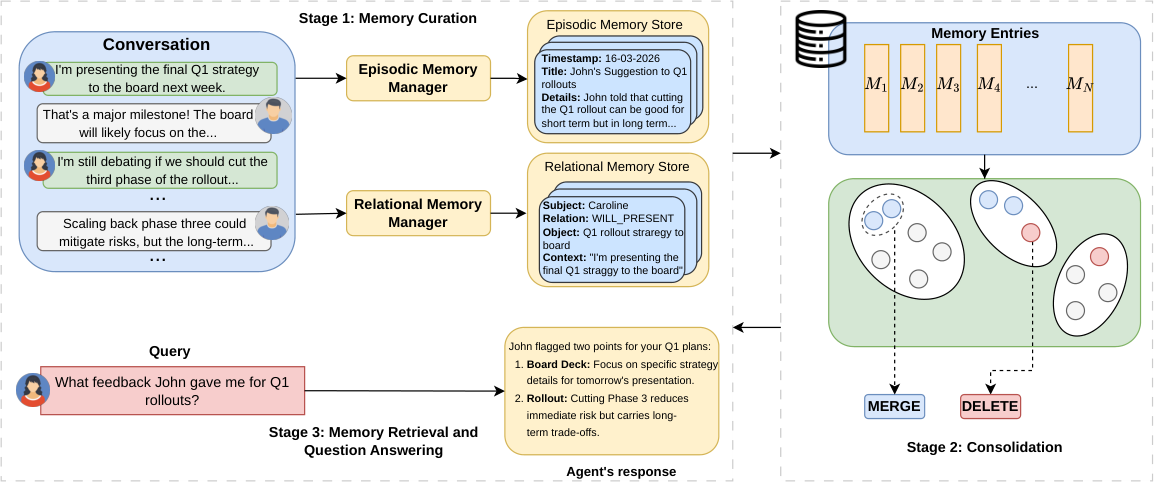
Figure 1 from Gupta et al., Complementary Curation and Consolidation, unchanged. CC BY-NC-SA 4.0. Open the image for its original resolution.
For RAGE and Recurse, this supports comparing structured relations together with the episode that gave them meaning. The paper does not test frame-semantic graphs or population-level coordination. Its value here is a concrete dual-representation baseline, including the losses introduced by consolidation.
What to carry into our research
The strongest shared lesson is to evaluate transformations, not just the final answer. A memory can retain relevant text while losing its role in an argument, its connection to an earlier source, its principal, or its conditions of use.
A useful research comparison would follow the same evidence through ingestion, representation, retrieval and subsequent use. It should test whether repeated sources gain spurious weight, principal bindings change, or useful context disappears during consolidation. Those are proposed checks, not capabilities demonstrated by this reading.
The positive result to look for is better downstream reasoning with fewer attribution and lineage errors under the same evidence and resource budget. If richer structure improves only presentation, or depends on perfect upstream labels, it has not yet established the coordination benefit we want to understand.
Selection and coverage
This first regular issue covers the seven days to 08:02 UTC on 30 October. The full recent category listing and October index were checked against an update-sorted API feed extending back beyond the interval. Five new submissions were selected for relevance to shared memory and evidence handling; papers in Tuesday's pilot were deduplicated. All links identify the versions read. This is a curated review, not an exhaustive assessment or independent replication.