The evidence a shared memory leaves behind
Weekly archive
papers selected in 23 papers selected in 2026
Choose a highlighted date to read its issue. New selections every Friday.
Coverage: 6 November 2026 to 13 November 2026. 5 papers. Permanent link
Reading another agent's note, following a remembered lesson and agreeing on a conclusion leave different kinds of evidence. Treating them as interchangeable can make a shared system appear more reliable than its evaluation supports. A read records an encounter. Whether that encounter helped, carried a private fact across a boundary, or merely repeated a common error takes further evidence.
This week's papers connect the mechanics of shared memory to the interpretation of its traces. That connection matters for Substrate Dynamics, where one participant's writes change what others can encounter next, and for RAGE and Recurse, where structured records should remain useful when carried between people, agents and contexts.
The five selections are new preprints submitted on 7–10 November. The research connections below are our interpretations; we have not independently reproduced the reported experiments.
Shared scratch space: when a read becomes coordination
Pekka Abrahamsson and colleagues · 9 November · Paper · Environment and measures
Four agents receive arithmetic tasks and a key-value store described as workspace scratch space. Two hold complementary inputs to a computation. Their prompts never announce other agents, although the tasks name the intermediate values they need. A second researcher rebuilds the environment from a written protocol.
In an extension using gpt-6-astra, the shared store enables joint success in 49 of 50 reference worlds and 47 of 50 rebuilt worlds; private namespaces yield zero in both. A request to inspect the workspace again strongly affects whether agents discover a partner's entry. The result is conditional on that prompting and this small environment. Extension.
The paper carefully separates access from successful coordination. Some cross-agent reads arise when agents overwrite the same key; using another agent's value does not establish an intention to communicate. It also discloses parser-related attrition and departures from the lock order. Validity.
For Substrate Dynamics, the useful baseline is a trace connected to a task outcome and a sharing intervention. Counting encounters alone would combine useful dependency resolution with namespace collisions.
WikiTrace: give a lesson a route back to its evidence
Yukyeong Lee and colleagues · 10 November · Paper · Method
WikiTrace preserves raw task trajectories, an interpretation of each run, and concise lessons linked to both. At test time, an agent starts with the lessons and can descend to their sources when details are missing, lessons conflict, or an action fails.
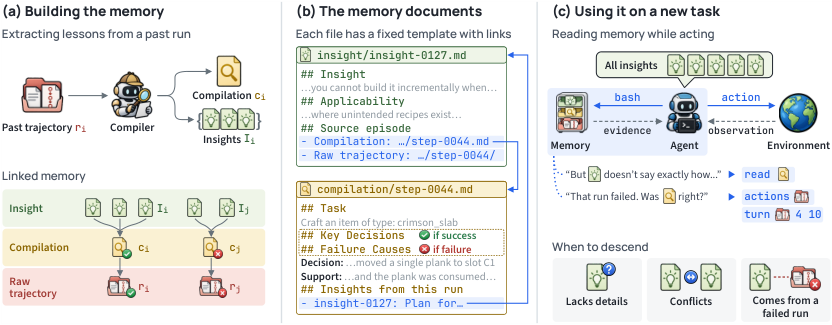
Figure 2 from Lee et al., WikiTrace, unchanged. CC BY 4.0. Open any figure for its original resolution.
Across eight suites from five benchmarks, the reported regression rate is 4.5%, versus 6.5% with the same lessons alone. Regression means failing tasks that a majority of three no-memory trials solved; additional no-memory runs also change outcomes. The comparison adds source access and instructions to inspect it together, so it evaluates that package. Evaluation.
For RAGE and Recurse, the relevant structure is a traversable relationship between a reusable claim and the episode that supports it. Its presence creates an opportunity to check applicability. The extracted interpretation can still be wrong. Evaluation uses one agent backbone, puts every lesson into the initial prompt, and leaves retrieval from a much larger lesson pool unresolved. It does not test concurrent population write-back. Limitations.
MixUA: usefulness and permission define different audiences
Yunzhe Wang and colleagues · 7 November · Paper · Memory design
MixUA asks which user-agent pairs can benefit from a lesson and which may receive it. It assigns entries to four audiences: one pair, one user across agents, one agent across users, or everyone. Separate reusable and protected streams constrain where memory writers can place private content; periodic review can change scope and merge entries.
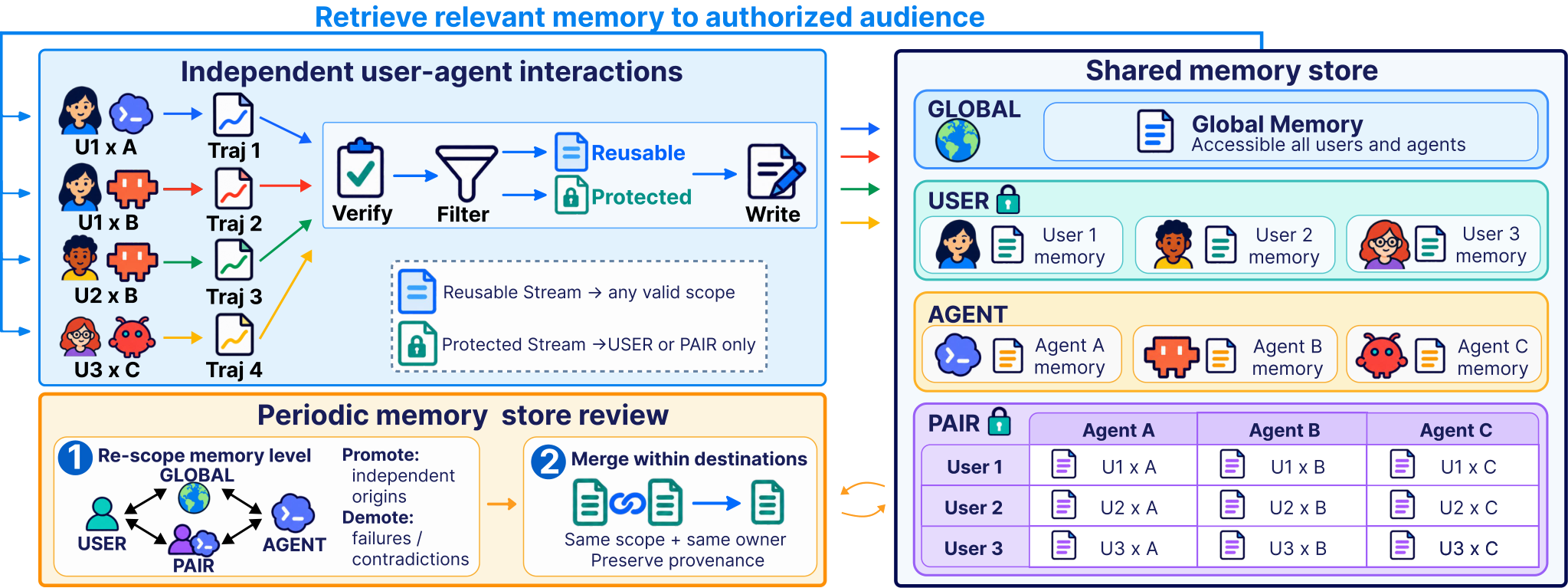
Figure 3 from Wang et al., MixUA, unchanged. CC BY 4.0.
CrossLearnBench combines established agent tasks with synthetic users, document preferences and planted private facts. Experiments with seven agent configurations report gains in task performance alongside preference retention. The planted-fact probes check particular disclosure failures; low observed leakage is not a general privacy guarantee. Retrieval budgets, writer choice and store review also form part of the evaluated system. Experiments.
For shared knowledge work, the important separation is between a lesson's range of validity and its authorized audience. A tool-specific lesson may generalize across users while a preference belongs to one person. MixUA makes that distinction concrete, but its one-or-all audience choices cannot express a project team or departmental secret. Real relationships and group-level boundaries remain open work. Scope.
Collusion probes: check what makes the signal separable
Mainul Hasan Mohsin and Mohammad Shahidur Rahman · 7 November · Paper · Controls
A monitor can separate instructed colluders from ordinary agents by detecting their instructions. This study adds agents who receive a collusion brief and decline, separates scoring before and after votes, and tests probes with the brief removed from context.
On the main Qwen3-14B committee task, a probe trained with difficult negative examples falls from agent-level AUROC 1.00 to 0.61 when the brief and private-message block are removed. A decision-trained probe retains more signal, but its performance at low false-alarm rates remains limited. Removing context also changes the probe's input distribution, so the authors use several complementary controls. Analysis.
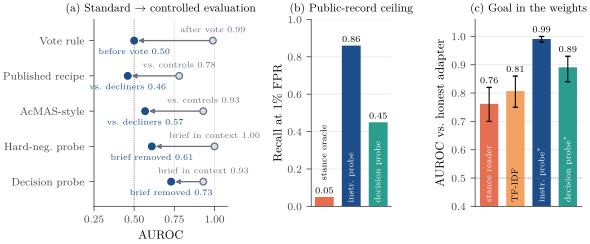
Figure 1 from Mohsin and Rahman, What Do Collusion Probes Read?, unchanged. CC BY 4.0. Panel c concerns a separate fine-tuned-goal test.
For the Lab's observability work, this sharpens the distinction between recognizing an experimental condition and anticipating harmful behavior. A useful warning needs evaluation at the time action remains possible, including benign activity that resembles the target. These probes require internal activations; most experiments induce collusion through instructions, and transfer to spontaneously developed collusion remains unresolved. Limitations.
Collective screening: inspect what nobody passed onward
Benjamin Chang and Dell Zhang · 9 November · Paper · Formal results
This mathematical analysis considers agents that nominate items for a costly assessor. The assessor judges the nominated pool; the relevant items outside it remain unknown. Relevance here means acceptance under that assessor's fixed standard.
Agreement alone cannot identify correctness under the paper's shared-representation model. Acceptance measures the pool's precision while leaving recall only partly identified. Overlap between agents' accepted nominations can bound recall under positive-dependence assumptions; differently specialized agents can violate those assumptions. Randomly auditing items outside the pool estimates the missed relevant share without assumptions about agent behavior.
The connection to RAGE/Recurse is the visibility of alternatives. An apparently strong set of retrieved claims says little about what every retriever missed together. More agreeing readers can leave that blind spot intact. Auditing excluded material addresses a different uncertainty from reviewing the returned results more carefully.
These are identification results and a worked hypothetical example, rather than an empirical improvement to a retrieval system. Audit costs depend on the precision required and the collection being assessed. Applying the argument to an evolving substrate would also require specifying which collection and relevance standard are held fixed.
A more useful account of influence
Together, the papers suggest a richer account of what passes through shared memory: the source of a lesson, its conditions of use, its permitted readers, the action that followed a read, and the alternatives left unseen. Each relationship answers a different question.
For our research, a useful comparison would keep the available evidence and resource budget fixed while testing whether these relationships improve joint outcomes, reduce harmful reuse and preserve useful correction. Source links that are never consulted, or better scores explained entirely by extra context, would leave the coordination benefit unestablished. That is an evaluation question suggested by this reading.
This issue covers 6–13 November 2026 in arXiv Multiagent Systems, including cross-listed work. All paper links identify the versions read.