What a boundary allows agents to repair
Weekly archive
papers selected in 23 papers selected in 2026
Choose a highlighted date to read its issue. New selections every Friday.
Coverage: 30 October 2026 to 6 November 2026. 5 papers. Permanent link
A shared environment gives agents ways to affect work they never directly supervise. A code change alters another developer's options. A reviewer's approval determines whether a team encounters corrective evidence. A corrupted calendar entry can reach several agents before anyone raises an alert.
This week's papers examine the boundaries around those encounters: what agents can learn from one another, whose requirements survive a handoff, and which actions remain possible after something goes wrong. For Substrate Dynamics, these are questions about how the medium conditions collective behavior. For RAGE and Recurse, they make the preservation of context concrete: a useful record should let a later participant identify an alternative, its evidence and the authority behind a constraint.
The five preprints below were submitted between 30 October and 5 November. Results are the authors' reports; we have not independently reproduced them. Research connections and suggested comparisons are our interpretations.
ParallACT: separate success can still produce a broken whole
Rishabh Mediratta and colleagues · 30 October · Paper · Evaluation
ParallACT studies two coding agents acting for separate principals in a shared repository. Its 155 diagnostic instances require reconciling conflicting implementations or agreeing on an interface. The requirements are jointly satisfiable; independently valid patches can fail together.
On Claude Opus 4.8's 50 contradictory instances, joint success falls from 62% for one agent given both requirements to 16% for parallel agents unaware of each other. A sequential handoff reaches 54%. Communication helps only partly and increases token costs. Parallel success credits the best outcome across three merge policies, so the low rate persists even with that generous reconciliation measure. Methods.
This is a useful substrate example because the artifact carries consequences between independently motivated actors. For Recurse, an interesting comparison would preserve each principal's requirements alongside edits, then test whether agents consult them before changing a shared interface. The outcome should be joint correctness and cost. Better individual patches or more messages would leave the coordination question unresolved.
The benchmark deliberately selects coordination problems, uses pairs, and cannot estimate conflict prevalence in ordinary development or establish behavior in larger populations. Limitations.
Pluralist agents: preserve what a belief is conditional on
Jonas Hallgren, David Hyland and Mahault Albarracin · 3 November · Paper · Experiments
This mathematical simulation separates beliefs within a theory from support for that theory. Agents retain two supplied accounts of combustion and receive different observations. The researchers independently vary communication of conditional estimates and communication of theory support.
Under selective observation, sharing estimates can leave groups favoring opposing explanations; sharing theory support changes that outcome. After an evidence shift, exchanging both kinds of information improves some predictions beyond sharing support alone. Theory adoption, numerical disagreement and predictive accuracy remain distinct measurements. Results.
For RAGE and Recurse, this suggests keeping a claim's theoretical context available when composing a shared account. A population may agree on a numerical prediction while holding different explanations, or agree on an explanation while predicting differently. A single similarity or consensus score would conceal that distinction.
These are Gaussian belief-updating agents with fixed theories, observation schedules and graphs. They neither invent alternatives nor choose experiments. The study does not demonstrate improved scientific discovery or test whether LLMs maintain such representations. A comparison in our setting would need to measure whether preserving alternatives actually improves revision when evidence changes. Scope.
Beyond Division of Labor: a gate can withhold correction
Chih-Hsuan Yang and colleagues · 2 November · Paper · Submission-policy analysis
A Planner–Executor–Reviewer organization assigns the Reviewer control over submission to an external evaluator. The authors vary roles while holding team size, topology and call budget fixed. Role prompts produce specialization, but also change how often the team receives feedback.
In an exploratory run on 400 Omni-MATH problems with gemma-4, keeping role prompts while forcing submission every cycle raises recovery after an initially wrong answer from 0.198 to 0.613. This supports submission policy as a contributor in that setting. It does not establish equivalence to a role-free team or a general benefit from removing review.
The evaluator sees the reference answer: recovery is oracle-assisted. The main feedback comparison and forced-submission study are exploratory follow-ups. A disclosed mismatch between graded and recorded answers also changes recovery estimates under alternative scoring. Limitations.
The connection to our read vs write gating work is methodological: locate the gate and measure the opportunities it changes. A cleaner retained record, more specialized roles and better correction are separate outcomes. An evaluation of shared knowledge work should count feedback encountered and acted upon alongside final accuracy.
Signed but Not Safe: authenticate the extraction boundary
Xiaobo Chen and colleagues · 5 November · Paper · Design
This preregistered study turns requirements into quoted passages and executable predicates, authenticates the manifest with an HMAC, and checks final decisions in code. Synthetic tasks separate errors during extraction from later tampering and decision failures.
In the Qwen3-8B attack comparison, signed manifests reduce unsafe commits from 69.4% to 9.0% relative to structured JSON. The package combines checking, repair, abstention and integrity protection; the whole reduction cannot be attributed to signing. A separate pre-signing injection raises signed-manifest violations from 14.6% to 37.5%: the authenticated record can already contain the wrong requirement. Results.
For frame-based knowledge work, this distinguishes a faithful source quotation from a faithful interpretation of its force. A preference can be quoted accurately yet incorrectly treated as mandatory. Signing preserves that mistake. A useful RAGE/Recurse comparison would therefore score extraction fidelity separately from downstream compliance with the extracted record.
The tasks have small, finite settings and checkable predicates, with an honest runtime assumed. Some safety gains come from refusing to commit; useful completion and abstention must remain visible. The findings do not establish reliable interpretation of unrestricted requirements. Validity.
Airlock: contain consequences after influence has spread
Zhonghao Zhan and colleagues · 4 November · Paper · Architecture
Airlock records data consumption in a provenance graph alongside a delegation tree. After an alert, it traces affected work and controls mediated actions. Its optimized policy seeks a smaller containment boundary while keeping healthy work running.
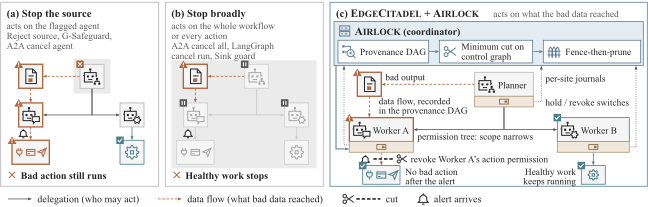
Figure 1 from Zhan et al., Airlock. Original SVG, unchanged; CC BY 4.0. Open either figure for its full resolution.
In the system comparison, both Airlock policies prevent tainted protected effects after the alert in all 42 content-fault and 10 rogue runs. The optimized cut retains a median 100% of healthy at-risk work without redoing it, versus 83% for full quarantine. These are controlled workflow results. The paper also reports physical smart-home LLM runs. Evaluation.
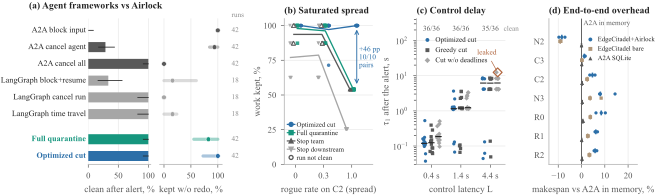
Figure 6 from Zhan et al., Airlock. Original SVG, unchanged; CC BY 4.0. Hollow marks in panel b identify runs that leaked.
The boundary is consequential for Substrate Dynamics: containing actions does not repair beliefs already absorbed into shared memory. In late-alert HomeSvc runs, the assistant continues with contaminated context. Guarantees require mediated channels and trusted enforcement; the prototype also encounters ingestion limits beyond roughly ten agents across three hosts. Scope.
Airlock supplies a concrete containment comparator. Whether a knowledge substrate preserves useful disagreement and supports subsequent correction remains a separate test.
A comparison worth making
Together, these papers suggest following a correction through the environment: who can state a requirement, retain a rival account, request feedback, revise shared work and stop its external consequences. Each transition can succeed while another fails.
For our research, a useful next comparison would hold evidence and resource budgets fixed while varying those opportunities. Measure joint task success, recovery after changed evidence, unauthorized effects and useful work retained. Keep provenance construction and interpretation errors visible rather than supplying perfect labels silently.
The claim to test is that richer shared context makes correction more effective. If the same improvement follows from simple sequencing, more evaluator calls or blanket shutdown, that simpler explanation should survive the comparison. These are proposed evaluations, not capabilities established by this week's reading.
Selection and coverage
This issue covers updates after 08:02:51 UTC on 30 October through 08:04:18 UTC on 6 November. The complete recent cs.MA listing, including cross-lists, was checked against an update-sorted API feed extending before the interval. We screened 84 new submissions and 52 revisions of older submissions by title and relevance, then read the five selected full texts. Previously covered IDs were deduplicated. All five selections are new submissions; links identify the versions read. This is a curated review rather than an exhaustive assessment.