What a shared memory makes possible
Weekly archive
papers selected in 3 papers selected in 2026
Choose a highlighted date to read its issue. New selections every Friday.
Coverage: 20 October 2026 to 27 October 2026. 3 papers. Permanent link
A shared memory changes more than what an agent can recall. It changes which contributions become visible, which approaches keep receiving attention, and which experiences survive into the next task. This week's selection approaches those decisions from three directions: incentives for exploration, selective exchange of findings, and explicit memory maintenance.
This is a test issue, prepared on Tuesday before the regular Friday cadence. The source is arXiv's Multiagent Systems category, including cross-lists. The three selected preprints were submitted on 22–25 October. Their results have not been independently reproduced here.
Coral Discovery: keeping alternative approaches alive
Xinxing Ren and colleagues · 23 October 2026 · Paper · Full text
The contribution. Coral Discovery gives autonomous research agents a board of research directions. Progress earns credit relative to a direction's own best result, with incentives to explore less tried approaches. The board advises agents rather than assigning every action. This changes what it pays to pursue when one approach already leads.
The evidence. On nine program-improvement tasks, the authors report six wins, one tie and two losses against their reproduced multi-agent baseline. Wider exploration has a cost: it underperforms on LLM-SQL and does not beat the single agent on transaction scheduling. More directions do not guarantee better use of a fixed budget. Results and limitations.
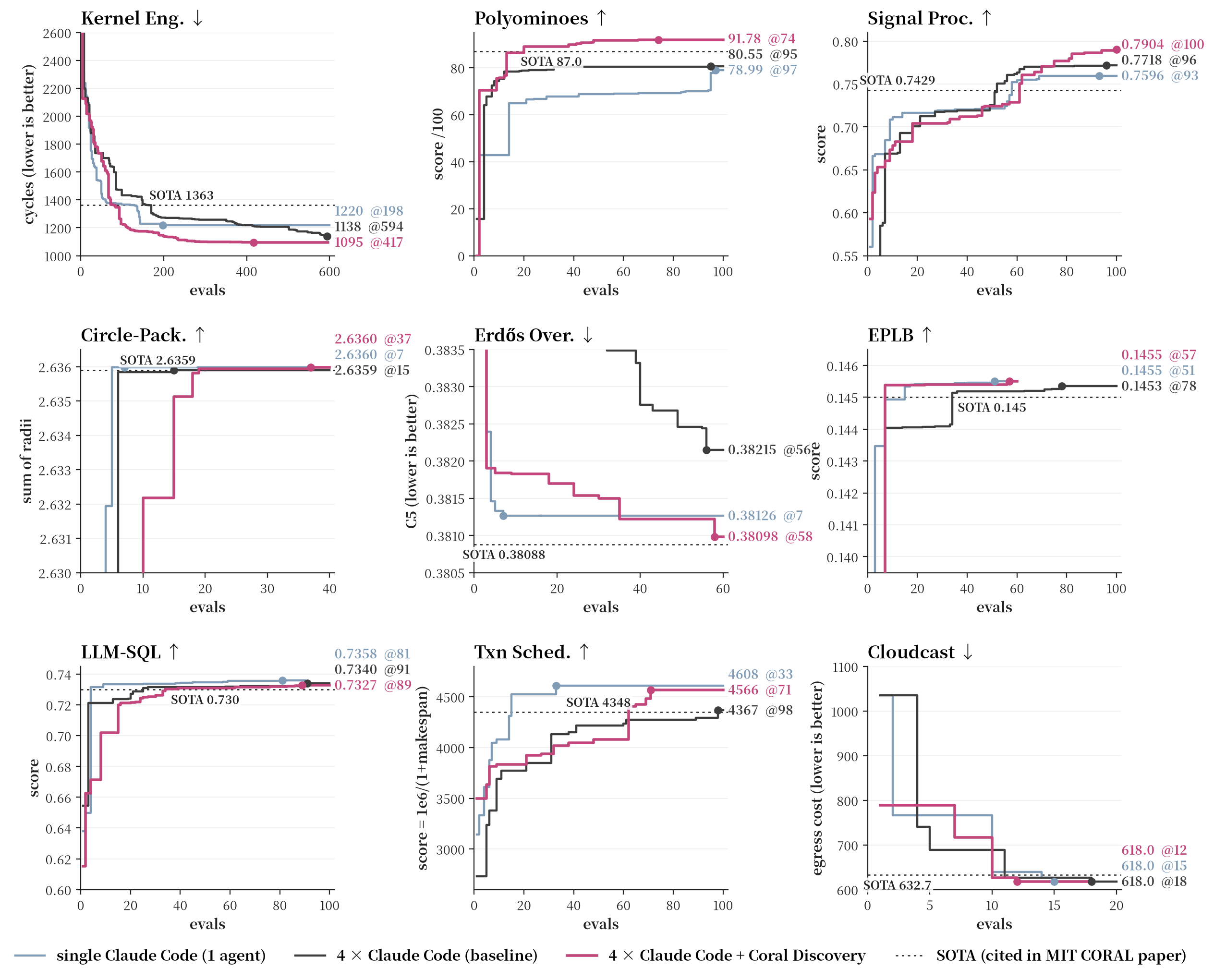
Figure 4 from Ren et al., Coral Discovery. Original figure, unchanged. CC BY-NC-ND 4.0. Click to inspect at full size.
Why it matters for us. This is the strongest conceptual match in this issue. Substrate Dynamics asks how a shared medium shapes a population's subsequent activity. Coral makes the allocation of attention an explicit design choice. For RAGE and Recurse, it suggests a useful question: can a knowledge interface preserve promising alternatives alongside the current best answer? That connection is our interpretation, not a result established for our systems.
A question to carry forward. What distinguishes an alternative worth preserving from one that keeps consuming attention without producing useful evidence?
Muffin: exchange the finding, keep the reasoning local
Ping-Lin Kuo and colleagues · 22 October 2026 · Paper · Full text
The contribution. Muffin routes demanding questions to asynchronous agents that exchange selected intermediate findings through a shared buffer. Private reasoning stays local; a summarizer assembles the answer. This offers a concrete alternative to repeatedly sharing complete debate histories.
The evidence. The authors evaluate four reasoning benchmarks and four open-weight models. They report the best accuracy in 17 of 20 settings. In their step-wise comparison with multi-agent debate, they report 19.2 percentage points higher accuracy and 77.4% fewer tokens. Those numbers describe that comparison, not a universal cost reduction. The paper explicitly leaves tool use, planning and long-horizon execution for future work. Evaluation.
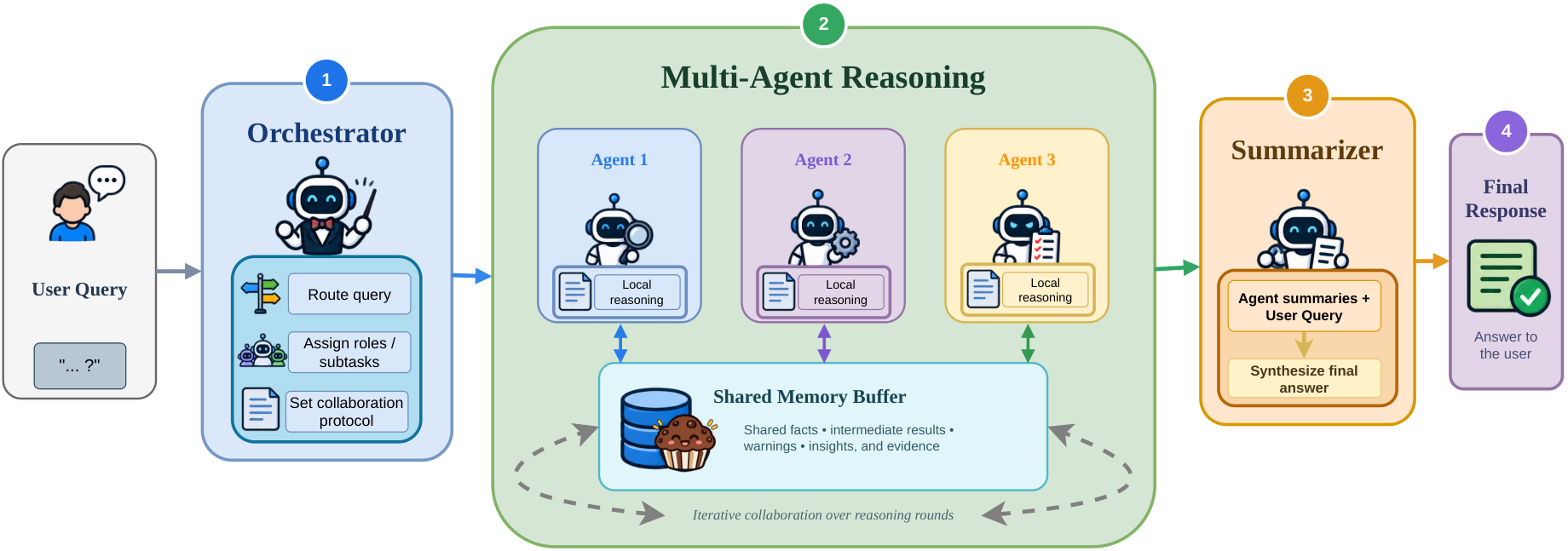
Figure 1 from Kuo et al., Muffin. Original figure, unchanged. CC BY-NC-ND 4.0. Click to inspect at full size.
Why it matters for us. The paper makes the unit of exchange worth examining. A finding can be easier to reuse than a reasoning transcript, but compression can also remove qualifications or source context. RAGE's interest in structured meaning and Recurse's interest in inspectable provenance meet at that boundary. The next question is what a finding must retain for another agent to use it responsibly.
A question to carry forward. Does a compact shared finding preserve the evidence, uncertainty and context needed to challenge it later?
EvolveMAS: memory needs maintenance
Yalun Wu and colleagues · 25 October 2026 · Paper · Full text
The contribution. EvolveMAS pairs each main agent with a MemoryAgent. It maintains episodic, semantic and working memory outside the main reasoning context. Experience updates memory within an episode; outcomes inform partner profiles and interaction strategies reused across episodes. Model weights stay fixed.
The evidence. Across cooperative, mixed-motive and adversarial settings, the authors report the strongest normalized average score among their comparisons. Ablations support contributions from both online memory governance and cross-episode reuse. These are benchmark results for this architecture. They do not establish that accumulated memory remains reliable indefinitely, or that the same gains transfer to a persistent shared knowledge base. Experiments.
Why it matters for us. Recurse aims to make context durable across sessions and tools. EvolveMAS is a reminder that durability creates an editorial problem: an observation, a provisional interpretation and a reusable strategy should not silently become interchangeable. Its memory separation is useful to compare with frame-based representation, while remembering that these are different mechanisms.
A question to carry forward. When experience becomes reusable knowledge, can a later reader still recover what was observed and what was inferred?
The connection across the three
Together, these papers make three decisions visible: what receives attention, what gets shared, and what survives. Each belongs in an account of a knowledge substrate as a coordination medium.
Coral is the first paper to read for population-level exploration. Muffin offers the clearest implementation comparison for asynchronous exchange. EvolveMAS is the most useful prompt for thinking about memory's lifecycle. None validates our proposed interventions. They give us better comparisons and sharper questions.
How this issue was selected
The category's recent listing was screened for relevance to shared knowledge, coordination, diversity and persistent context, then the selected papers' methods, results and limitations were read in full text. This is a curated reading, not a systematic review. The category view covered announcement days 21–27 October; submission dates were checked separately. Older papers encountered during discovery were not presented as new this week. Source links above identify the versions read.